
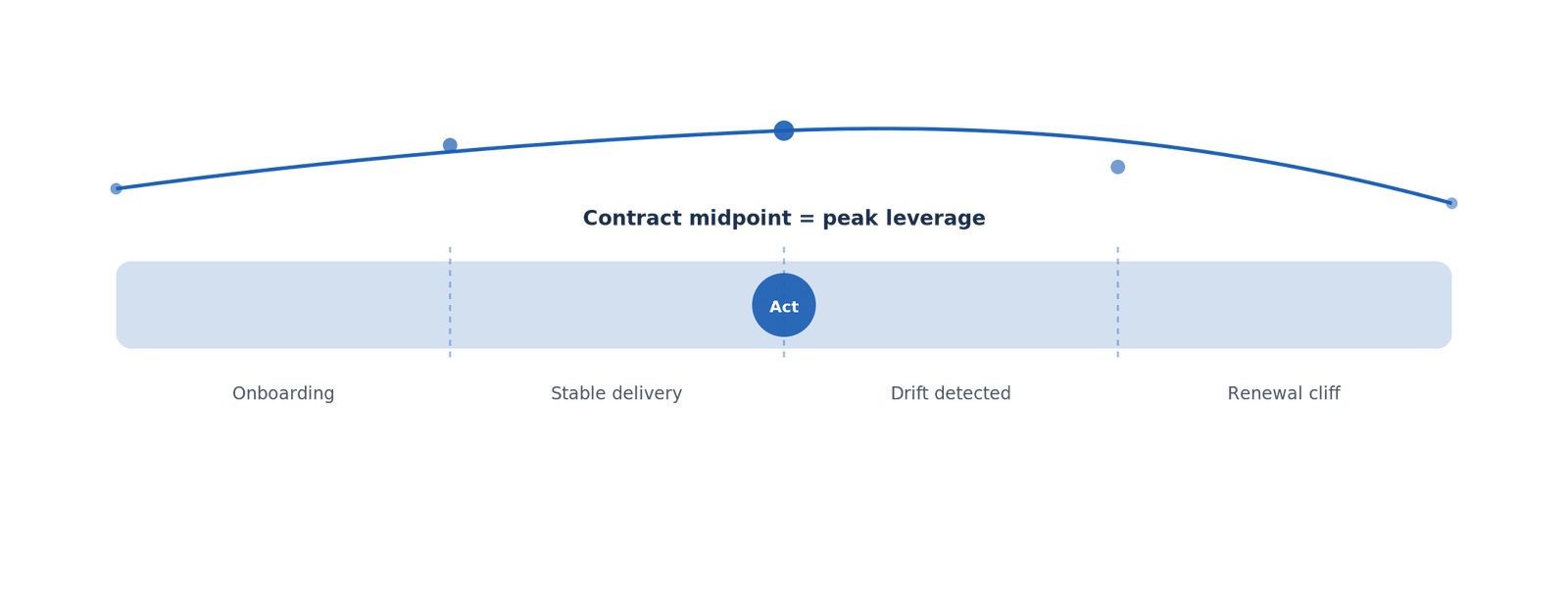
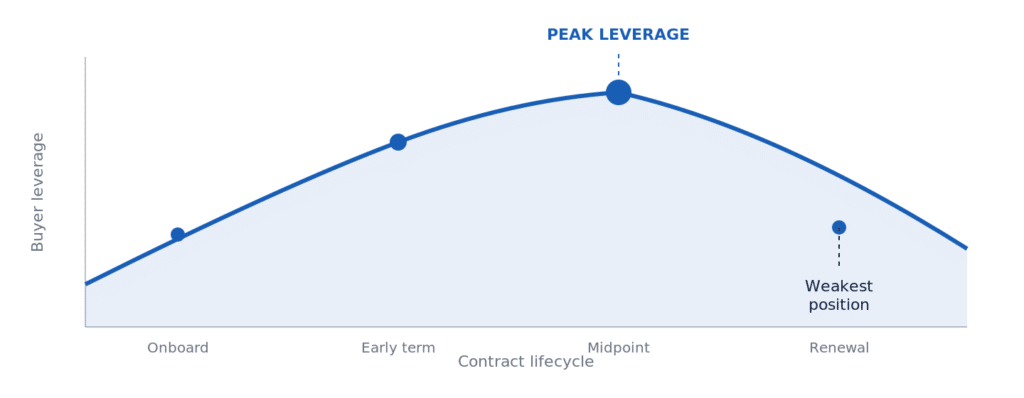
Waiting until contract renewal to confront a vendor's underperformance is the weakest leverage position a buyer can adopt. The right moment to surface, document, and act on vendor performance issues is roughly the midpoint of the contract — when both parties still have a working interest in the outcome and the cost of acting is materially lower than the cost of waiting.
2026-05-09
Not every vendor underperformance pattern warrants a structured intervention. Most can be managed through ordinary governance channels. There are three patterns, however, that consistently indicate the need for formal action before the renewal window opens.
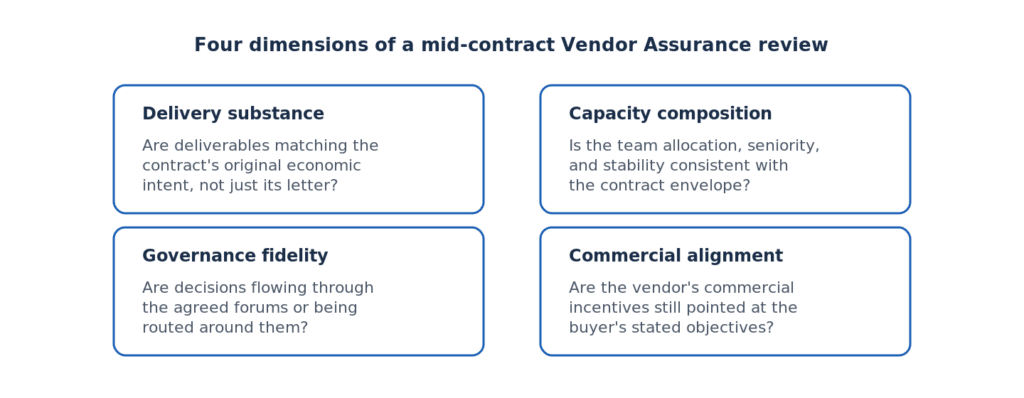
The vendor is technically delivering against the contract — services are being rendered, milestones are being marked complete — but the substantive value of the deliverables is materially below what the contract anticipated. Quality has drifted. Edge cases are being declined. Change requests are being treated as out-of-scope where the contract is ambiguous. This pattern is the most common and the easiest to discount, because each individual instance can be defended. Cumulatively, it constitutes a substantial drift from the contract’s original economic intent.
The vendor is allocating less senior or experienced personnel to the engagement than the contract envisaged, or rotating personnel more frequently than is appropriate for the technical complexity. The work is being delivered, but by a more junior or less stable team. This pattern is structurally important because it tends to compound — the team that delivers the next phase is even less experienced than the team delivering the current one, and the cumulative quality decline is invisible in any single delivery review.
The vendor is consistently routing decisions away from the formal governance forums established by the contract — taking issues to friendly stakeholders rather than to the joint steering committee, pre-positioning the executive sponsor before scheduled meetings, deferring difficult issues into private side-channels rather than escalating them through agreed mechanisms. This pattern is the most diagnostic, because it indicates that the vendor has assessed the governance structure as something to be navigated around rather than worked through.2
1. Forrester Vendor Risk Management (2023). The economics of mid-contract intervention on enterprise IT relationships.
2. Gartner & IDC (2024). Vendor performance and the hidden risk in enterprise IT contracts.
3. IT Delivery Assurance internal analysis (2025). Vendor lead times and structural leverage in multi-year IT contracts.